
4 MINUTE READ
Welcome to Pie-ology 101! Your Intro to Pie class covers all types of pie: custard pie, molasses pie, meat pies, hand pies… but before we get to the filling of this lesson, let’s establish a base of knowledge: a pie is a baked dish - savory or sweet - usually consisting of pastry dough. The dough may form the base and the top of the dish, or just the base (as in custard pies), or just the top (as with shepherd’s pie and cobblers). They may be free-standing, served in a dish, or hand-pies such as empanadas and samosas. How many types of pie are there? As many as creative bakers can invent! I’ve simmered down four main categories of pies to serve up to you, so let’s dig in to a sampler plate of types of pie from all around the world and all throughout history, including:
Fruit pies
Cream & custard pies
Desperation pies
Meat pies
1. Fruit Pies
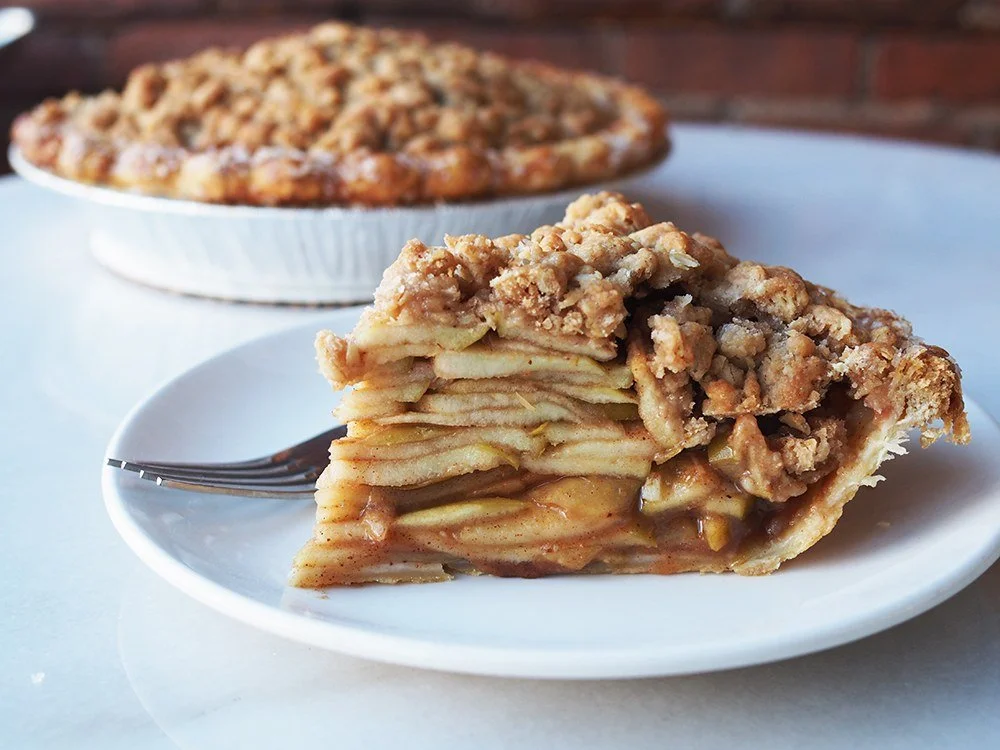
Apple, blueberry, cherry, oh my! These types of pie are all considered fruit pies. Fruit pies have deep roots in history, and evolved out of ancient meat pies. Sometimes literally: today’s mincemeat pie, a holiday season staple in Britain, used to literally be a combination of fruit and minced beef or venison, but today’s mince pies typically stick to just apples, raisins, nuts and spices for filling. Fruit pies were very popular in Medieval Europe. The apple pie is first cited in historical texts dating back to 14th Century England. With exploration and colonization, apple pie spread to British colonies around the globe: Canada, Australia, New Zealand, and the United States. Due to the seasonal nature of its staple ingredient, fruit pies are typically very seasonal and regional delicacies. Apple pies, for example, are common during the fall in northern, apple-growing regions of the United States; whereas peach pies are more common in the Southeast of the US. Berry pies are more common in the spring when those fruits are in season: blackberry, blueberry, and strawberry pies are more common in the spring and summer months while the fruit is fresh. Modern preservation technology has allowed us to make fruit pies all year round thanks to canned fruit pie filling. Cherry pie filling hit US grocery shelves 100 years ago, in the 1920s, making cherry pies a year-round diner staple, gleaming under glass alongside their creamy counterpart, custard pies.
2. Cream & Custard Pies
Fun Fact: these are the types of pie most commonly used for pieing, which is the act of throwing a pie in someone’s face. Kids, don’t try that at home! What is a cream pie? Characterized by a smooth, soft, silky texture, these types of pie have a dairy-based filling. This can be light and whipped like grasshopper pie, or baked custard like pumpkin pie, or a combination of both, as in key lime pie. They can be as elaborate as Mississippi Mud Pie, which combines brownie, custard, and cream; or as simple and rustic as Chess Pie. What is chess pie? Chess pie is a Southern American staple of dubious origin, consisting of a basic crust filled with a mixture of flour, eggs, sugar, butter, and milk or condensed milk. This very basic custard pie sometimes used an acid, such as vinegar or lemon juice, to brighten the flavor and add tartness. The name “chess pie” is an eggcorn or mishearing of the phrase “it’s just pie,” said in the Southern dialect. Chess pie is so simple, and uses such basic ingredients, that it can also be considered a “desperation pie,” as you’ll see below.
3. Desperation Pies
Steeped in history, desperation pies arose from clever use of limited ingredients to become enshrined in cherished tradition, only to be mostly forgotten today. Before refrigeration, home cooks could only use shelf-stable and non-perishable ingredients to bake with. When fresh ingredients like peaches or apples were not in season, clever substitutions were made to simulate textures and produce filling, satisfying, and tantalizing alternatives. Bakers might substitute green tomatoes or even crackers for apples to bake mock apple pie. Simple custards in pie filling are also made with staple pantry ingredients that are affordable and easy to have on hand even in times of economic hardship, hence “desperation.” Flour, eggs, butter, sugar, and milk are common basic ingredients to which other staples are added for variation. Vinegar pie adds vinegar for tartness when lemons aren’t available. Water pie uses water for a cheap way to stretch on-hand ingredients. And then there’s the Pennsylvania Dutch classic Shoofly Pie! What is shoofly pie? It’s actually more like a cake baked into a pie crust. Made out of water, brown sugar, and molasses, it was typically cooked in the wintertime when eggs were more scarce, with molasses serving as the liquid substitute for eggs in this desperation pie. Typically eaten for breakfast rather than as a dessert treat, this dense and filling slice could be picked up and eaten in the hands. No frills and no fuss, desperation pies remind us of a time when pie was more of a staple part of the everyday diet, as with the very first pies, meat pies!
4. Meat Pies & Fish Pies
These are probably the oldest types of pie known to history. Versions of meat pies date back to the Neolithic Era, 6000 BC, to drawings on Egyptian tomb walls. England has a rich tradition of meat pies dating back across history, and they are still common there today. Tudor England’s rich feasts saw elaborately decorated meat pies as the centerpiece of the meal. Eel pie and fish pie were popular in Victorian London, as these meats were abundant in the River Thames, serving as cheap and fresh local ingredients. Nineteenth Century farmhands were known to take a Bedfordshire Clanger to work as lunch: this heavy, long hand pie would be filled with savory meats and occasionally a sweet filling on one long end as dessert. Twentieth Century British pub fare might include a steak and kidney pie, or cottage or “Shepherd’s Pie” filled with meat, vegetables and gravy. In midcentury America, the availability of freezer technology and the rise of modern conveniences saw frozen dinners becoming very popular, and the frozen Swanson Pot Pie with chicken, turkey or beef fillings became an easy go-to for busy families. Today, meat pies remain popular as hand pies like empanadas, pasties, and beef patties sold in small shops or street stalls at street fairs across New York City. We’re partial to the classics, and if you like our pies, you’ll love the holiday almost devoted entirely to them…
